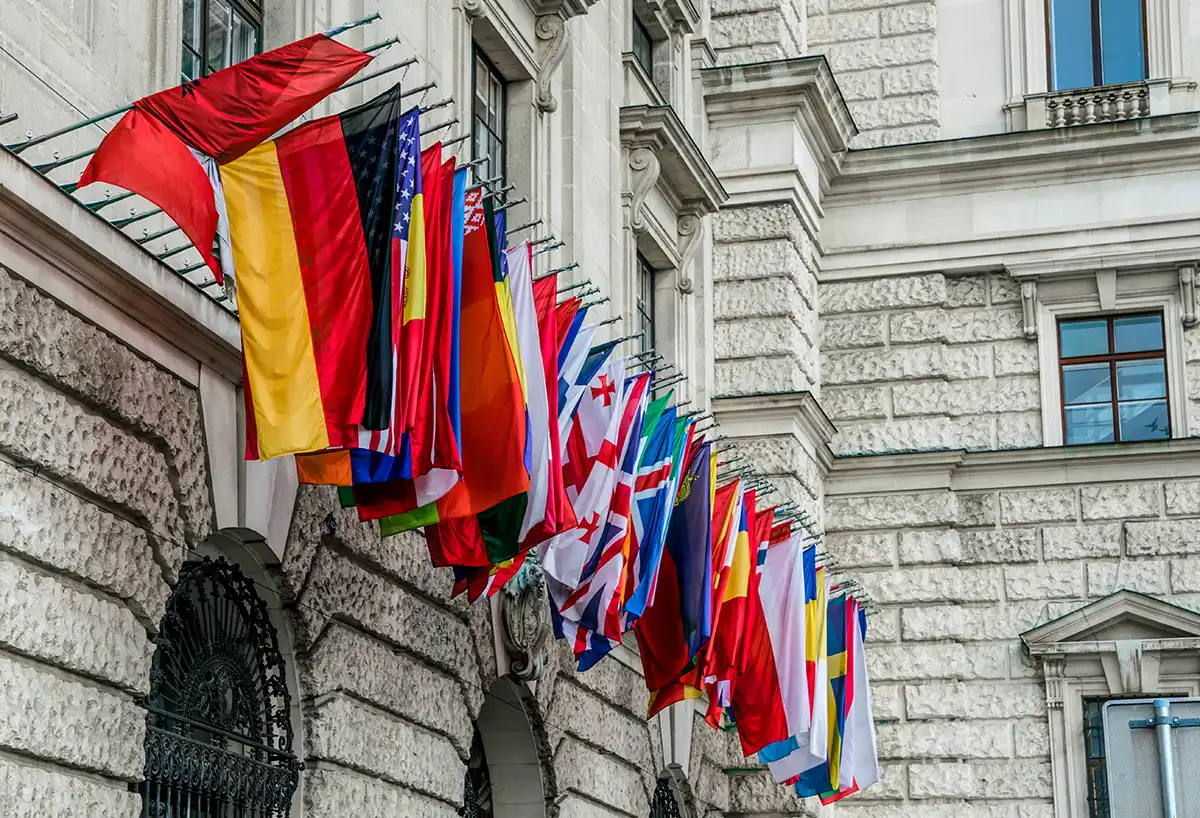
The British diplomatic service is one of the oldest and most extensive in the world. The Foreign, Commonwealth and Development Office runs over 280 embassies, high commissions and consulates across roughly 170 countries — a network that, even after the FCO-DFID merger and post-Brexit recalibration, remains one of the most consequential foreign-policy infrastructures any government maintains. Joining it as a Diplomatic Service entrant means passing the FCDO Fast Stream or direct-entry recruitment route, both of which screen out most of who applies.
Most public conversation about this career fixates on the salary. That's understandable — Whitehall pay bands are public, and the word "ambassador" implies a paycheck that matches the prestige. The reality is more layered. Entry-level diplomats earn less than the public assumes, the Senior Civil Service bands rise meaningfully but rarely to the multiples that comparable private-sector roles would command, and the most interesting part of the compensation never appears on a payslip.
That gap between the public image and the actual answer is where this gets useful for anyone seriously thinking about the FCDO: what does a British diplomat actually earn, and which postings genuinely shape a career?
What a British diplomat actually earns
New entrants to the Diplomatic Service typically join through the Fast Stream or direct entry at Higher Executive Officer (HEO) or Senior Executive Officer (SEO) level — roughly GBP 32,000 to GBP 50,000 a year on the home base before any London weighting. Solid for a graduate civil-service entry, comfortably below what an equivalent qualification might attract in private-sector consulting or in the City. It is not the figure most readers associate with the word "ambassador."
Career progression runs through Grade 7, Grade 6 and into the Senior Civil Service. The SCS structure has four bands — SCS1 through SCS4 — with the median SCS salary around GBP 92,000 and ambassadorial roles typically falling within SCS1 to SCS3, broadly GBP 90,000 to over GBP 150,000 depending on the post. Permanent Under-Secretary, the head of the FCDO and the most senior civil service diplomat, sits at the top of the scale and earns substantially more. On top of base, the FCDO operates a long-established overseas allowance system — Cost of Living Allowance, Hardship Allowance, accompanying-spouse allowances, school fees for dependent children, and provided accommodation. On hard or expensive posts the package can change the financial picture significantly.
But the most interesting part of this compensation never appears on a payslip. The real "pay" is structural: a career across five to seven postings on every continent, family life in three languages, the access that comes from representing the United Kingdom in rooms where bilateral and multilateral decisions are made, and the institutional weight of carrying a foreign service whose missions overseas have been continuous in some capitals for two hundred years. That form of compensation explains, more than any SCS band, which posts inside the FCDO are quietly fought over.
- Strategic weight of the country for UK foreign-policy, trade and security interests
- Visibility from Whitehall — work read at No. 10 or by the Foreign Secretary accelerates a diplomatic career
- Quality of life on post: housing, schools, climate, medical access and family fit
- Language and operational complexity — Mandarin, Russian, Arabic and Korean posts attract incentive pay but compound the workload
- Hardship and security profile: hardship allowances rise with risk, and so does the career-shaping weight of having held the post

Which FCDO postings get fought over rarely comes down to base pay alone. Mandate, representation, daily life and operational pressure carry far more weight.
LIGHTFIELD STUDIOS / Adobe Stock
The Entente Cordiale, defence cooperation, and a bilateral file that has not stopped expanding since Brexit.
If there is one post in the FCDO that signals seniority on the European brief, it is the British Embassy in Paris. The UK-France relationship is one of the FCDO's most operationally dense files — defence and security cooperation under the Lancaster House treaties, the joint dimension of nuclear and force-projection capability, intelligence cooperation, and a post-Brexit trade and mobility file that has only grown.
The professional appeal is clear. Paris is the post where UK European policy is delivered hands-on, where the head of mission talks to the Élysée and to the Quai d'Orsay weekly, and where Whitehall reads the embassy's reporting closely. The bilateral consular footprint is dense — British residents, students, business presence — and Paris coordinates a network that extends to British Consulate Bordeaux and British Consulate Marseille.
France as a destination needs little selling. Schools that work for diplomatic families, a short Eurostar journey to London, cultural depth, and the kind of host society that British diplomats can navigate without the cultural friction some posts impose. Paris is demanding — but it is one of the most career-defining tours the FCDO offers, and one where work and family life both function on a high plane.
Germany is the UK's most important European trading partner — and Berlin is the post that has quietly grown in weight every year since 2020.
The British Embassy in Berlin is, by quiet consensus inside the FCDO, the European post that has gained the most importance over the last decade. The UK-Germany relationship after Brexit became more — not less — operationally complex: trade and standards, defence and Ukraine support, intelligence cooperation, climate cooperation, scientific and educational ties through Horizon and other frameworks, and a substantial British community in Germany.
The bilateral file rewards the kind of diplomat who can run multi-track engagement. Berlin coordinates with British Consulate-General Munich and British Consulate-General Düsseldorf across consular work, trade promotion, and engagement with the German Länder — a structure that maps more naturally onto Germany's federal political life than a single embassy could.
For an FCDO career, a tour in Berlin is the kind of assignment that compounds. Mid-career officers grow into the post; ambassadors built on Berlin tend to have credibility on the rest of Europe afterwards. Quality of life is excellent for diplomatic families: schools, accessible health care, short flights or trains to London, and a host society that is generally welcoming to UK-Germany cooperation at every level of seniority.
Family-friendly, English-language post — with a substantive bilateral relationship that goes beyond what the geography suggests.
The easiest mistake when reading about FCDO postings is to assume size of host country correlates with importance of the relationship. The British Embassy in Dublin is a useful counter-example. The UK-Ireland bilateral file is denser than people realise — the Good Friday Agreement and its successors, the Common Travel Area, the post-Brexit Northern Ireland Protocol and Windsor Framework, the deeply integrated services and people-flows on both sides of the Irish Sea, and a diaspora that runs in both directions.
What makes Dublin quietly one of the most sought-after FCDO postings is the combination of substantive work and high family quality of life. Ireland offers an English-language environment, good schools, a short flight to the UK, and a host society that is generally welcoming despite the complicated historical layers. The work itself rewards diplomatic skill at the higher-order level: a relationship in which symbolism, presence and tone matter as much as the file in the in-tray.
For an FCDO career, Dublin is the type of post that proves a different point. Not every career-shaping assignment has to be a heavyweight capital. Some posts get fought over because they make a real family life possible alongside genuinely serious work — and the British Embassy in Dublin is one of them.
Quiet on the front pages, deeply substantive on Five Eyes and Pacific files — and one of the highest-quality-of-life postings in the Service.
Between Commonwealth states, the senior diplomatic mission is formally a High Commission, but the British presence in Wellington functions for most purposes as an embassy — and for the British diplomats who serve there, it is one of the most distinctive postings the FCDO offers. The UK-New Zealand relationship runs on Five Eyes intelligence cooperation, climate and Pacific policy, a substantial bilateral trade flow (UK-NZ Free Trade Agreement in force from 2023), and a remarkable two-way movement of people, students and working-holiday participants.
What Wellington offers, beyond the file, is a quality of life that few comparable postings can match. A small, walkable capital; clean air; intact natural environment within reach in every direction; world-class schools; and a host society that is genuinely welcoming to British diplomats and their families. For an officer choosing a post where family life can absorb the disruption of overseas service better than usual, New Zealand is a quietly prized assignment. The Commonwealth-historical link also makes the protocol surprisingly easy.
The trade-off is geographic. London is more than 24 hours away in flight time, the time-zone gap means that home-office calls happen at New Zealand night, and any major UK visit takes serious planning. But the FCDO has come to recognise that distant, livable, strategically interesting posts like Wellington are not career detours. They are career chapters with their own weight.
An embassy in the country where UK foreign-policy weight is concentrated daily — operating under wartime conditions since 2022.
Any honest answer to what a British diplomatic career involves has to include the hardship post. The British Embassy in Kyiv has, since the full-scale invasion in February 2022, operated under conditions that change the daily experience of diplomatic work: air-raid sirens, security protocols that govern movement around the city, family-status restrictions, shortened rotations, and an operational tempo driven by the most active UK foreign-policy commitment of the decade.
What the hardship post asks of a diplomat is something the comfortable postings don't. Coordination of UK military, humanitarian and reconstruction assistance to Ukraine; constant cooperation with the FCDO's response cell; close engagement with Ukrainian leadership at every level; and the long-tail consular work that comes with hundreds of thousands of UK citizens involved in support of Ukraine, in business and in third-sector capacities. Hardship Allowance and the FCDO's danger-pay framework recognise the difference financially — but the financial premium is the smallest part of what makes this tour count.
Inside the FCDO, postings like Kyiv carry weight that the public ranking of "glamour posts" doesn't capture. They demonstrate that an officer can run a mission under stress, that they can deliver UK foreign policy when the operating environment is, by Western European standards, unimaginable, and that they can be trusted with the next file at the next level of seniority. A tour in Kyiv today is the kind of assignment that quietly shapes a career for the next decade.
Embassy, high commission, consulate and honorary consulate are not the same Service experience
Anyone considering the FCDO should understand the distinction between embassy, high commission, consulate and honorary consulate postings. Embassies and high commissions are operationally similar — the high-commission title is Commonwealth-historical, and on the FCDO career path the work is comparable. Consulates focus on consular operations, citizen services and regional engagement. Honorary consulates are part-time appointments, often held by a private citizen of the host country, and are not part of the FCDO's Diplomatic Service career path.
What changes with the type of mission is the nature of the work, the level of leadership responsibility, and the visibility from Whitehall. An ambassadorial role at a major embassy combines political representation, the management of all sections of the mission, and direct interlocution with the host government. Heads of consular operations at a Consul-General level run citizen services and regional engagement — a different but equally substantive leadership track.
For anyone moving from general interest into concrete career planning, the page on the diplomatic career is a useful next stop.
Foreign, Commonwealth and Development Office
The official FCDO landing page on GOV.UK: bilateral relationships, embassies and high commissions worldwide, consular services, ministerial responsibilities and current foreign-policy priorities.
Civil Service Fast Stream — Diplomatic and Development
Official Fast Stream programme page for the FCDO Diplomatic and Development scheme — the main graduate entry route into a UK diplomatic career, with eligibility, application timeline and assessment process.
Civil Service Careers — Grades and Pay
Authoritative reference on how civil service grades and pay bands work — HEO/SEO/G7/G6/SCS — and how they map onto Diplomatic Service career progression up to ambassadorial level.
Senior Salaries Review Body — SCS Pay Evidence (GOV.UK)
Annual government evidence to the Senior Salaries Review Body — the most current public statement on Senior Civil Service pay structure, including the bands that cover ambassadorial-level roles in the FCDO.
“The real compensation in a Diplomatic Service career doesn't appear on any pay band. It shows up in the places you've lived, the relationships you've built, and the question of which postings British diplomats actually compete for inside the FCDO when the salary stops being the criterion.”
If the criterion is the closest-neighbour bilateral file and the dense operational reality of a high-stakes European relationship, Paris is the clearest case in this selection. If the criterion is the European post whose weight has grown the most since 2020, Berlin is hard to overtake. If genuinely substantive work paired with family-friendly daily life is the priority, Dublin earns its place. If livability on a strategic but distant file matters more than the visibility of a G7 capital, Wellington has a gravity of its own. And if the criterion is the hardship file that quietly defines a generation of FCDO careers, Kyiv is the posting this article cannot leave out.
Read this way, the question that started here — what does a British ambassador earn — turns out to be the wrong frame. The right question is which postings a British diplomat would actually fight for inside the FCDO if pay band weren't the criterion. The real compensation in this career is not the monthly base; it's the sum of the places lived, the relationships built, and the rooms where, for a few years at a time, a British diplomat was the voice of the United Kingdom.